Tuesday, February 28, 2017

Monday, February 20, 2017
Weeks 15/16: The moment
In every love story there is a moment, that moment you can look back on and say: "That's it. That's the moment I fell in love."
I am now at that point where I am smitten, completely head-over-heals in love with this mysterious and beautiful and breathless and thirsty place: Kenya.

And I am looking back in my memories of the past few months and wondering, what was the moment? What was the moment I fell in love with Kenya?
Was it that day when I was in the car on the way to Nanyuki for the very first time, when a rainbow appeared over the yellow plains?
Was it the first time I sipped that hot milky chai, poured from a thermos and combined with a diabetes-inducing amount of sugar?

Was it when I planted a tree in the rich dark soil and the women from the village surrounded me with singing?

Was it the day we found a chameleon at an old woman's house, and she would have given it to me to take home, because of how fascinating I found it?

Was it that moment as we sat underneath the shade of a tree, eating bananas and laughing at our poor attempts to speak Kikuyu?
Was it that walk on the way back from Muthaiga with the young girls, singing as we crossed the river: "Way-maker, miracle-worker, promise-keeper, light in the darkness..."?


Was it the Saturday at the hotel, watching football and drinking sodas?
Was it the day at Ol Pejeta, standing up in the car to watch the regal elephants cross the road?
Was it the moment we met Susan for the first time, that woman who has the joy and strength of a hundred women, as she takes care of street children and orphans?

Was it the time a woman said I was the first white person who had ever visited her home?

Was it Sunday morning, waking up with time to spare, and hearing, faintly, the singing from the nearby church?
Was it the day lingering in the classroom with my new friend from the village?
Was it the moment the street youths started singing "Hakuna Mungu Kama Wewe"?

Was it the time we surprised Monicah, our Kenyan mother, on her birthday?

Was it the day Florence taught us how to make chapati, together belting out "All of Me" as we became covered in flour from rolling the dough?

Was it the day riding to Nairobi, seeing the fog rise over the tea fields on the hills?
Was it the day at Wasini Island, swimming with those big flippers and that ridiculous-looking snorkel, and discovering a whole new undersea world in the reef?


Was it Christmas dinner at the hostel, people from all over the world at the table sharing fresh fish, and a Tusker to fight off the heat?
Was it each morning, walking to the gate, the little dog dutifully following us, and jumping on us, under the shade of the guava tree?

Was it that Saturday visiting the disabled children's home, when little Austin grabbed my wrist?

Was it the morning on Mount Kenya, exhausted in every part of the body but watching as the sun rose, illuminating every corner of that majestic mountain?
Was it that day, walking along the market stalls filled with fresh mangoes, cabbages, tomatoes, onions, spinach, avocados, potatoes, and more in all colours, that day when a thought just entered my head: 'I don't want to leave here. I want this to be my life.'?

Soon, my time here will only be a memory. Can I bear that? I don't know. I feel like there is still so much more to learn about this diverse land. There are so many languages I still don't know. There are so many dishes I still can't cook. I miss my Nova Scotia home, of course. Nowhere feels like home like those rugged shores. But here I am. I don't want to leave. I have visited a few places on this vast planet, but have rarely felt like this. I am preparing myself to leave a place I love, and I don't know when I can return. I know this whole post just reeks of sentimentality. But guys, our stay on Earth is short. Let's appreciate every moment. Today in church, as I listened to the wise teaching of the guest speaker, a thought occurred to me, a truth that Jesus speaks throughout the Scriptures, I think, but that I never put into words, until now. The thought is this: On my deathbed, I don't think I will be wishing that I had loved less. God has been showing me lately that though love is usually the difficult way, it is always the best way. So, though it is painful to say goodbye to this country and its residents, many of whom I can now call friends, I know that the time here and this love was worth the pain.

I am now at that point where I am smitten, completely head-over-heals in love with this mysterious and beautiful and breathless and thirsty place: Kenya.

And I am looking back in my memories of the past few months and wondering, what was the moment? What was the moment I fell in love with Kenya?
Was it that day when I was in the car on the way to Nanyuki for the very first time, when a rainbow appeared over the yellow plains?
Was it the first time I sipped that hot milky chai, poured from a thermos and combined with a diabetes-inducing amount of sugar?

Was it when I planted a tree in the rich dark soil and the women from the village surrounded me with singing?

Was it the day we found a chameleon at an old woman's house, and she would have given it to me to take home, because of how fascinating I found it?

Was it that moment as we sat underneath the shade of a tree, eating bananas and laughing at our poor attempts to speak Kikuyu?
Was it that walk on the way back from Muthaiga with the young girls, singing as we crossed the river: "Way-maker, miracle-worker, promise-keeper, light in the darkness..."?


Was it the Saturday at the hotel, watching football and drinking sodas?
Was it the day at Ol Pejeta, standing up in the car to watch the regal elephants cross the road?
Was it the moment we met Susan for the first time, that woman who has the joy and strength of a hundred women, as she takes care of street children and orphans?

Was it the time a woman said I was the first white person who had ever visited her home?

Was it Sunday morning, waking up with time to spare, and hearing, faintly, the singing from the nearby church?
Was it the day lingering in the classroom with my new friend from the village?
Was it the moment the street youths started singing "Hakuna Mungu Kama Wewe"?

Was it the time we surprised Monicah, our Kenyan mother, on her birthday?

Was it the day Florence taught us how to make chapati, together belting out "All of Me" as we became covered in flour from rolling the dough?

Was it the day riding to Nairobi, seeing the fog rise over the tea fields on the hills?
Was it the day at Wasini Island, swimming with those big flippers and that ridiculous-looking snorkel, and discovering a whole new undersea world in the reef?


Was it Christmas dinner at the hostel, people from all over the world at the table sharing fresh fish, and a Tusker to fight off the heat?
Was it each morning, walking to the gate, the little dog dutifully following us, and jumping on us, under the shade of the guava tree?

Was it that Saturday visiting the disabled children's home, when little Austin grabbed my wrist?
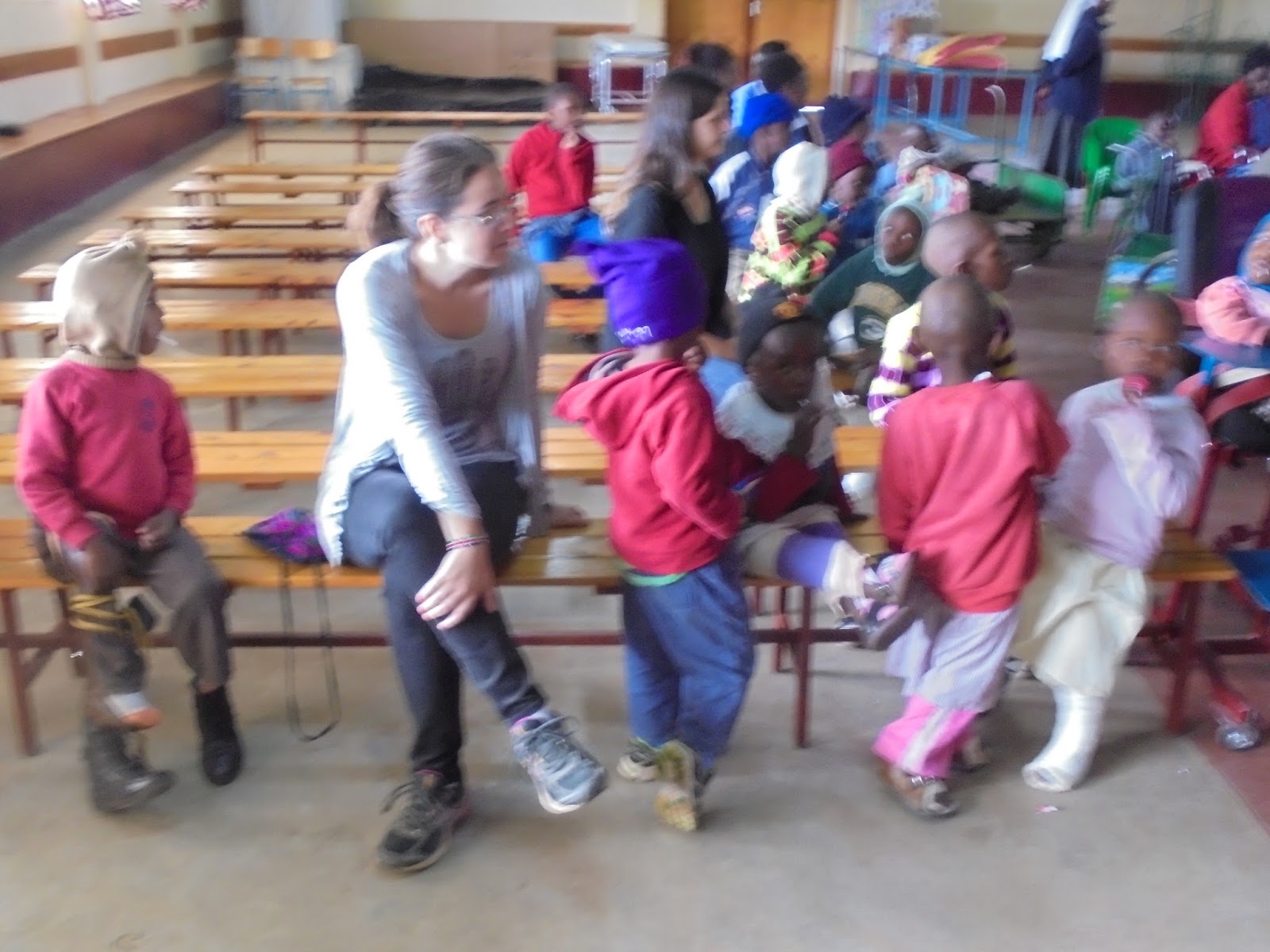
Was it the morning on Mount Kenya, exhausted in every part of the body but watching as the sun rose, illuminating every corner of that majestic mountain?
Was it that day, walking along the market stalls filled with fresh mangoes, cabbages, tomatoes, onions, spinach, avocados, potatoes, and more in all colours, that day when a thought just entered my head: 'I don't want to leave here. I want this to be my life.'?

Soon, my time here will only be a memory. Can I bear that? I don't know. I feel like there is still so much more to learn about this diverse land. There are so many languages I still don't know. There are so many dishes I still can't cook. I miss my Nova Scotia home, of course. Nowhere feels like home like those rugged shores. But here I am. I don't want to leave. I have visited a few places on this vast planet, but have rarely felt like this. I am preparing myself to leave a place I love, and I don't know when I can return. I know this whole post just reeks of sentimentality. But guys, our stay on Earth is short. Let's appreciate every moment. Today in church, as I listened to the wise teaching of the guest speaker, a thought occurred to me, a truth that Jesus speaks throughout the Scriptures, I think, but that I never put into words, until now. The thought is this: On my deathbed, I don't think I will be wishing that I had loved less. God has been showing me lately that though love is usually the difficult way, it is always the best way. So, though it is painful to say goodbye to this country and its residents, many of whom I can now call friends, I know that the time here and this love was worth the pain.

Wednesday, February 8, 2017
Week 14: Peak experience
Mount Kenya is the tallest mountain in the country, and second highest on the continent, following Mount Kilimanjaro. This mountain is sacred to the Kikuyu people. As an office, we had been planning on climbing it for some time.
Spending a weekend away from civilization was exactly what I needed at this time. I had become extremely obsessed with US politics, and every time I opened twitter or reddit I would be shocked and enraged by one piece of world news or another. I was overwhelmed with the injustice in the world and yet media availed me with a constant stream of injustice. It was toxic. Spending three days with no network and in one of the most naturally beautifully places in the world was the best reset I could have. I felt like God was saying "I made this world. And nobody can destroy it without my consent."
Even on the mountain, though, injustice was not hidden: the guide pointed to a valley and said "There used to be a glacier there, but... global warming." I knew these glaciers provide water for the people below.
But the mountain still remained. It was large and strong and I think of the Bible verse that says "if you have faith the size of a mustard seed, you will say to this mountain, ‘Move from here to there,’ and it will move.'" Seeing the majesty and strength of Mount Kenya, this mountain where people have disappeared without a trace, this fortress of stone and ice, this verse comes to life. The mountain nearly conquered us, and we were not moving it: just walking on it. Imagine that just a little faith in our God can move that mountain! It shows his great power.
So, let me show you some photos and tell you the story of Mount Kenya!


Day 2 began with this incredible sunrise, and continued to give incredible views throughout the 14km of hiking. We meandered through valleys reminiscent of the moors I had traversed in England just a few months ago.


We finally reached camp just as we felt snow and hail falling. In this case, we were staying in the lodge. I cannot imagine if we tented that night, as the cold was unbelievable. I was worried for my Kenyan colleague who had never experienced cold like that before. But he survived, as did we all. We drank lemon tea and ate a hearty meal and went to bed very early. I slept in a huge down jacket: that's how cold it was! I love this photo of the whole Baraka team at the camp.


Day 3 began at around 2:30am, when our guide, Mohammed, woke us up. We groggily took some tea and checked our equipment before exiting the relative warmth of the camp. It was 3am, and I was cold and sore and dirty. But when I saw the stars, I forgot about all that. It was the dead of night. I was in one of the most wild places I have ever been, and all was silent. The black silhouette of the mountain rose in front of me, surrounded by thousands of stars. "Wow," was all I could say, and I know it was not enough. Sometimes words just cannot express the beauty of the stars.
The next three hours were a blur: my headlamp illuminated only the steps in front of me, the only sound was the trudge of many boots on rocks and snow. My breathing was heavy and methodical: first "Hal-le-lu-jah," but then quickly changing to "Oh-God-Oh-God." Every step was like a stretch to muscles I had forgotten existed. I felt only primal needs: to breathe, and to drink water. I wondered if we would make it to the top. I wondered if it was worth it.
But then, all of a sudden, we reached the top. We climbed to the summit and there, the sun was rising beyond the clouds. I started crying. The beauty overwhelmed me. I was crying in part, I think, because I had not thought I would make it. I was crying because we had, and it was totally worth it. Hakuna mungu kama wewe.


So friends, that is that. We climbed a mountain this weekend. I look at that mountain every day from Nanyuki, and now I can look it and say "I was there." I am still in a lot of awe from that. I am thanking God for creating that place, and for allowing us to see it.
Wednesday, February 1, 2017
Week 13: Hope
I think we all need a bit of hope these days.
It's been just over a week since a reality TV star became the US president, and already I am getting exhausted by all the injustice.
Last week the US barred Syrian refugees from entering their country, indefinitely.
A few nights ago an attacker (I don't know who) killed several people in a mosque in Quebec City.
The other night I watched 13th on Netflix. It is hard for me to explain this documentary. It was just the kind of film where you sit silent and unmoving for the entire duration of the final credits. The documentary was just wave after wave of being shocked by injustice that casually exists and is for the most part unchallenged.
Quote at the end of 13th:
I am getting exhausted, because I cannot escape injustice. It sometimes seems like there is no choice but to tolerate it because to not tolerate it would require me to opt out of many of the systems of the world, systems that are pretty hard to escape. But I am at a point, personally, where I feel like I have no choice. Jesus said "By this everyone will know that you are disciples, if you have love for one another." So what does love for one another look like? What does bringing God's kingdom look like, here and now? And how can I have hope for God's Kingdom coming, when I see all these seemingly powerful unjust systems in the world?
Now, more than ever, we need hope. It is very easy to become discouraged. I wonder if the world will ever get better. But then...
Then I see a post on social media from a lady from my church at home. She is planning an event for the church ladies, and she wants to include making a quilt for the Syrian refugee family who will soon be arriving. The other ladies agree. I think of how some people in my church would have reacted to refugee sponsorship even just a few months ago. But now- people are gathering as a community to welcome strangers. What a beautiful picture of God's Kingdom.
Then I visit a primary school in rural Kenya. We are proposing a partnership with the school to support their feeding program. We talk about the importance of proper nutrition on learning in the school, and look around the grounds to see if there is a place where we can put a small farm. The head teacher agrees, and we form an enthusiastic partnership. Now, like in other schools in the area, the students can learn how to grow food, and they can benefit by eating that food at lunchtime daily. This will hopefully reduce drop-out rates and improve students' academic performance.
Then I visit a young man, in class 8. This child is part of Chalice's child sponsorship program. "What do you like to do in your free time?" I ask. He answers, "Running." "What do you like to do with your friends?" I ask. He answers, "Running." I ask his favourite sport, and this, unsurprisingly, is running. Finally, I ask him what he wishes to do when he grows up. Of course, he wants to be a runner. I imagine turning on the TV someday to see him take gold in the Olympics.
Then Hannah, a lady that shares a name and not much else in common with me, welcomes me into her home. Her child is sponsored, and she is the secretary of the microfinance group. She has used the money from the microfinance group to start a small shop, and she is making money for her family from this shop. On her little land, she has a kitchen garden. After we visit, she sends us with a bag full of spinach. It feeds us for three days.
Then I attend church, the church I can now call my church home in Nanyuki after four Sundays. Like always, the children sing a couple of songs during the service. One of these songs is familiar to me: "All other Gods/They are the works of men/But you are the most high God/There is none like you." I think of how I heard children at Malagash singing that very same song this summer. I think of how some of those children singing are the daughters and sons of teenage mothers. I think of how the church has welcomed these unconventional families with open arms. I am thankful for such a church.
Jesus gives the ultimate hope, though. Jesus both died and rose from the dead, which tells me two things about him: One, he understands suffering and injustice. And two, he is more powerful than the most powerful thing we can think of. I am thankful that Jesus is allowing me to be a part, even in such a small way, of toppling injustice.
It's been just over a week since a reality TV star became the US president, and already I am getting exhausted by all the injustice.
Last week the US barred Syrian refugees from entering their country, indefinitely.
A few nights ago an attacker (I don't know who) killed several people in a mosque in Quebec City.
The other night I watched 13th on Netflix. It is hard for me to explain this documentary. It was just the kind of film where you sit silent and unmoving for the entire duration of the final credits. The documentary was just wave after wave of being shocked by injustice that casually exists and is for the most part unchallenged.
Quote at the end of 13th:
“People say all the time, ‘well, I don’t understand how people could have tolerated slavery?’ ‘How could they have made peace with that?’ ‘How could people have gone to a lynching and participated in that?’ ‘That’s so crazy, if I was living at that time I would never have tolerated anything like that.’There is also a lot of injustice here in Kenya, by the way. There is corruption and blatant sexism and right now the doctors are on strike and that disproportionately affects the poorest people and people get put in jail for years and years for minor crimes and school fees are so prohibitive that some people can't even afford to send their children to secondary school and....
And the truth is we are living in this time, and we are tolerating it.”
I am getting exhausted, because I cannot escape injustice. It sometimes seems like there is no choice but to tolerate it because to not tolerate it would require me to opt out of many of the systems of the world, systems that are pretty hard to escape. But I am at a point, personally, where I feel like I have no choice. Jesus said "By this everyone will know that you are disciples, if you have love for one another." So what does love for one another look like? What does bringing God's kingdom look like, here and now? And how can I have hope for God's Kingdom coming, when I see all these seemingly powerful unjust systems in the world?
Now, more than ever, we need hope. It is very easy to become discouraged. I wonder if the world will ever get better. But then...
Then I see a post on social media from a lady from my church at home. She is planning an event for the church ladies, and she wants to include making a quilt for the Syrian refugee family who will soon be arriving. The other ladies agree. I think of how some people in my church would have reacted to refugee sponsorship even just a few months ago. But now- people are gathering as a community to welcome strangers. What a beautiful picture of God's Kingdom.
Then I visit a primary school in rural Kenya. We are proposing a partnership with the school to support their feeding program. We talk about the importance of proper nutrition on learning in the school, and look around the grounds to see if there is a place where we can put a small farm. The head teacher agrees, and we form an enthusiastic partnership. Now, like in other schools in the area, the students can learn how to grow food, and they can benefit by eating that food at lunchtime daily. This will hopefully reduce drop-out rates and improve students' academic performance.
Then I visit a young man, in class 8. This child is part of Chalice's child sponsorship program. "What do you like to do in your free time?" I ask. He answers, "Running." "What do you like to do with your friends?" I ask. He answers, "Running." I ask his favourite sport, and this, unsurprisingly, is running. Finally, I ask him what he wishes to do when he grows up. Of course, he wants to be a runner. I imagine turning on the TV someday to see him take gold in the Olympics.
Then Hannah, a lady that shares a name and not much else in common with me, welcomes me into her home. Her child is sponsored, and she is the secretary of the microfinance group. She has used the money from the microfinance group to start a small shop, and she is making money for her family from this shop. On her little land, she has a kitchen garden. After we visit, she sends us with a bag full of spinach. It feeds us for three days.
Then I attend church, the church I can now call my church home in Nanyuki after four Sundays. Like always, the children sing a couple of songs during the service. One of these songs is familiar to me: "All other Gods/They are the works of men/But you are the most high God/There is none like you." I think of how I heard children at Malagash singing that very same song this summer. I think of how some of those children singing are the daughters and sons of teenage mothers. I think of how the church has welcomed these unconventional families with open arms. I am thankful for such a church.
Jesus gives the ultimate hope, though. Jesus both died and rose from the dead, which tells me two things about him: One, he understands suffering and injustice. And two, he is more powerful than the most powerful thing we can think of. I am thankful that Jesus is allowing me to be a part, even in such a small way, of toppling injustice.
 |
| It is actually impossible to be discouraged when you get to be around this much cuteness |
 |
| Just another sunset |
 |
| So much love for these precious ones (Visit to the disabled children's home). |
Wednesday, January 25, 2017
Weeks 11/12: Kingdom persistance
One day, as part of the Christmas celebrations at our workplace, we hosted some street youths from Nanyuki to our office. I do not exaggerate when I say these are the poorest of the poor. We work with the poor every day in the office. But even the poor have homes, and families. These street youth were without both.They smelled terrible, to be frank. They lacked education. OK, you get the picture: they were poor. During this Christmas celebration, we gave each person a loaf of bread and some milk. Now, one of these street youths had a small little girl-- I presume her daughter-- with her. When nobody was watching, I saw a young man give his loaf of bread to the young mother. At this moment, I knew I had witnessed something beautiful. This man, with tattered shoes and dirty clothes, likely without a shilling to his name, gave the one thing he had to someone who needed it more. At that moment, I felt like Jesus was celebrating. I felt like he was saying: "See that guy? That guy gets it."
I keep hearing the word "resistance" these days among those of us who are not happy about the recently inaugurated US President. As I begin to write this, a historic march is beginning in Washington. Many people have the general idea that this man is someone who must be resisted. The more I think about this, the more I think the idea of resistance is not exactly what we as Christians ought to be doing. "Resistance" to me has a defensive connotation: you are resisting against something. In this case, people are resisting against the personality and policy of someone who is leading the most powerful nation in the world. But as Christians, I propose that rather than "resist," we "persist."
Galatians 6:9 says "Let us not become weary in doing good, for at the proper time we will reap a harvest if we do not give up."
Last night, as I opened Twitter on my phone and saw a barrage of tweets about the inauguration of someone who has admitted to grabbing women's genitals, I could have felt very angry. But instead of anger I felt hope. Because, you see, I follow Jesus. I thought of the ways Jesus upset the most powerful empire of his day. I thought of how he just drove the people in power crazy. And how? He taught people to love and forgive instead of hate and fear. He sat down for dinner with the very people the powerful were excluding from society. He healed the sick. Like the mad farmer in Wendell Berry's poem, every day he did something that did not compute. When tempted with power, Jesus refused. And yet he had the authority to raise people from the dead. So as I thought of this cartoon-villain-resembling man becoming president, I thought: Jesus is still King.
And that is not to say that Jesus somehow endorses the US presidency. I just mean that Jesus is still King. His Kingdom is not confined to the United States or any geographical area in the world. His Kingdom grows in people. We pray "Your Kingdom come." His Kingdom comes when that street boy gives away his only loaf of bread. His Kingdom comes when we choose to forgive a person who has deeply wounded us. His Kingdom comes when we hold a baby or child in our arms and, as Mister Rogers would say, love them into being. His Kingdom comes when we make friends with people who are from a different race or class or gender or age or sexual orientation than us. His Kingdom comes when we create a beautiful painting or poem or song. His Kingdom comes when we bake a casserole for someone who's just lost a loved one. His Kingdom comes when we welcome refugees into our homes and our communities. His Kingdom comes when we cultivate the land to help something good grow. His Kingdom comes when we dare to speak the truth about injustice.
The true resistance is within us. It is the choice we have to make. Will I be led by the Holy Spirit, who helps us love, humbly and wisely? Or will I be led by sin, which makes me selfish, to my own destruction? Instead of resisting against something, we are persisting on behalf of something much bigger: God's Kingdom coming on earth as it is in heaven.
This should be old hat for us followers of Jesus. We are always persisting, no matter who is in the White House. We are always living differently than the Kingdom of the world.
Perhaps the most radical thing we can do at this time is persist: persist in love and truth.
I really believe that real change comes from the individual and community level. Persisting in acts of love, Kingdom-building acts, every day, for years and years: that gives glory to the One who really has power. Because here's what I believe: Remember that boy, that young, dirty, poor man, who gave his only loaf of bread away? The Spirit in that boy is more powerful than the President of the United States will ever be.
I keep hearing the word "resistance" these days among those of us who are not happy about the recently inaugurated US President. As I begin to write this, a historic march is beginning in Washington. Many people have the general idea that this man is someone who must be resisted. The more I think about this, the more I think the idea of resistance is not exactly what we as Christians ought to be doing. "Resistance" to me has a defensive connotation: you are resisting against something. In this case, people are resisting against the personality and policy of someone who is leading the most powerful nation in the world. But as Christians, I propose that rather than "resist," we "persist."
Galatians 6:9 says "Let us not become weary in doing good, for at the proper time we will reap a harvest if we do not give up."
Last night, as I opened Twitter on my phone and saw a barrage of tweets about the inauguration of someone who has admitted to grabbing women's genitals, I could have felt very angry. But instead of anger I felt hope. Because, you see, I follow Jesus. I thought of the ways Jesus upset the most powerful empire of his day. I thought of how he just drove the people in power crazy. And how? He taught people to love and forgive instead of hate and fear. He sat down for dinner with the very people the powerful were excluding from society. He healed the sick. Like the mad farmer in Wendell Berry's poem, every day he did something that did not compute. When tempted with power, Jesus refused. And yet he had the authority to raise people from the dead. So as I thought of this cartoon-villain-resembling man becoming president, I thought: Jesus is still King.
And that is not to say that Jesus somehow endorses the US presidency. I just mean that Jesus is still King. His Kingdom is not confined to the United States or any geographical area in the world. His Kingdom grows in people. We pray "Your Kingdom come." His Kingdom comes when that street boy gives away his only loaf of bread. His Kingdom comes when we choose to forgive a person who has deeply wounded us. His Kingdom comes when we hold a baby or child in our arms and, as Mister Rogers would say, love them into being. His Kingdom comes when we make friends with people who are from a different race or class or gender or age or sexual orientation than us. His Kingdom comes when we create a beautiful painting or poem or song. His Kingdom comes when we bake a casserole for someone who's just lost a loved one. His Kingdom comes when we welcome refugees into our homes and our communities. His Kingdom comes when we cultivate the land to help something good grow. His Kingdom comes when we dare to speak the truth about injustice.
The true resistance is within us. It is the choice we have to make. Will I be led by the Holy Spirit, who helps us love, humbly and wisely? Or will I be led by sin, which makes me selfish, to my own destruction? Instead of resisting against something, we are persisting on behalf of something much bigger: God's Kingdom coming on earth as it is in heaven.
This should be old hat for us followers of Jesus. We are always persisting, no matter who is in the White House. We are always living differently than the Kingdom of the world.
Perhaps the most radical thing we can do at this time is persist: persist in love and truth.
I really believe that real change comes from the individual and community level. Persisting in acts of love, Kingdom-building acts, every day, for years and years: that gives glory to the One who really has power. Because here's what I believe: Remember that boy, that young, dirty, poor man, who gave his only loaf of bread away? The Spirit in that boy is more powerful than the President of the United States will ever be.
Tuesday, January 10, 2017
Week 10: Vineyard
As I return to the office after Christmas holidays, I can see God's grace so much in the past couple of weeks.
First, we moved houses. This was a bittersweet transition. We had been living with a lovely host family and had actually become quite close with them. But our plan had never been to live with a host family- it had been to have our own place. So when the opportunity came up, rather suddenly, we took it, and within a day, we had moved. While we miss our host family, our new house is perfect for the two of us: just a little cottage made of metal sheeting with vines crawling up the side, next to a lazy river. When we entered the house it just felt like home already. We are also already becoming close with the neighbours who share the compound with us, including a little dog who is pretty much our shadow. I like this place.
So I really felt God's grace in that move. It just seemed like the right thing at the right time. And things just kept on happening like that.
The other day I took a walk down a road near our new place. Since we had lots of time off I took lots of walks exploring the town. On this day, while exploring our new neighbourhood, I found something that really excited me: a metal sheeting building with a sign in front: Nanyuki Vineyard Church.
One of the struggles I have had here in Nanyuki is finding a church. I have visited many different churches but none of them quite felt like home. As I have written before, the prosperity gospel is quite common here and it has been hard for me to find a church that does not preach that. I love living in Nanyuki and have thought on occasion of staying here for good but knew that just would not be possible if I could not find a Christian community here. After weeks of "church-hopping," I was really starting to be discouraged, and resigning myself to the fact that maybe I would not find a church home here. That was until I went for a walk and stumbled upon Nanyuki Vineyard Church.
I grew up going to a Vineyard Church, probably up till the age of 16 or so. I have a lot of memories of that time, good and bad and confusing. I think anyone growing up in the evangelical tradition has those kinds of memories. The church I grew up in was particularly tumultuous and its birth, growth, and decline more or less coincided with my childhood.
It's been a while since I have been part of a Vineyard Church, but still when I saw that church sign it spelt H-O-M-E to me. I made a plan to go there this Sunday.
So on Sunday, I headed over to the church. I did not know what time the service started or even if it would be in Kiswahili, English, or the local language. Literally all I knew was the location of the church building. I just showed up at the church at around 10am.
I am so glad I did. As I met people, sang worship songs, and listened to the sermon, it became more and more clear: this would be my church home. This was such a relief, I was almost crying. It has been such a struggle to find a church home. It's hard not to have a church. It's so sweet to have one.
And I felt like there was some sort of poetry or symmetry to the whole thing. Because the Vineyard is, to me, Mama Church. My first memories of church are all wrapped up in Vineyard songs and Vineyard quirks. I was baptized in the Vineyard church: or rather, baptized in the Northumberland Strait by a pastor in the Vineyard church. There are a hundred Vineyard songs I know by heart. I want to know you/I want to hear your voice/I want to know you more.
It has been a while since I have thought about how those early church experiences have influenced my faith. But I sure thought of it on Sunday, singing "Hallelujah, Hallelujah, your love makes me sing" with a bunch of Kenyans, in a little church on the outskirts of Nanyuki. I am thankful for those early church experiences, despite how confusing they sometimes were for a child. Because even if I did not realize it at the time, those experiences demonstrated for me what being a Christian meant. I internalized those lessons, though maybe nobody knew they were teaching. I just watched the way the church lived. I internalized the lesson that being a Christian meant believing that the Holy Spirit would show up in your life; that being a Christian meant caring for the poor and forming meaningful relationships with people on the outside of society; that being a Christian was something that you did not keep to yourself, but that it was worth telling others about; that being a Christian meant being free to worship God however you best could. And our church was far from perfect, let me tell you that. But those lessons have never left me. Perhaps the most important lesson I learned was who is part of the church. Our church was a ragtag band of misfits, people who did not feel like they fit in to the established church or who had been wounded by her and people with mental illness and people struggling with addictions and people who were just lonely, in search of somewhere to belong. The people in my church growing up did not tend to pretend they were anything else but messed-up people desperate to know Jesus. That was my first experience of church.
And so I feel a certain affection towards the Vineyard Church. It does feel so much like family. Even in Nanyuki.
So I feel God's grace so much. Because I know that if we had not found this new place to live, I never would have found this church. It then feels like he is orchestrating this all! He is so good to me.

First, we moved houses. This was a bittersweet transition. We had been living with a lovely host family and had actually become quite close with them. But our plan had never been to live with a host family- it had been to have our own place. So when the opportunity came up, rather suddenly, we took it, and within a day, we had moved. While we miss our host family, our new house is perfect for the two of us: just a little cottage made of metal sheeting with vines crawling up the side, next to a lazy river. When we entered the house it just felt like home already. We are also already becoming close with the neighbours who share the compound with us, including a little dog who is pretty much our shadow. I like this place.
 |
| The new place- excuse the iPhone panorama fail |
 |
| Our faithful companion |
The other day I took a walk down a road near our new place. Since we had lots of time off I took lots of walks exploring the town. On this day, while exploring our new neighbourhood, I found something that really excited me: a metal sheeting building with a sign in front: Nanyuki Vineyard Church.
One of the struggles I have had here in Nanyuki is finding a church. I have visited many different churches but none of them quite felt like home. As I have written before, the prosperity gospel is quite common here and it has been hard for me to find a church that does not preach that. I love living in Nanyuki and have thought on occasion of staying here for good but knew that just would not be possible if I could not find a Christian community here. After weeks of "church-hopping," I was really starting to be discouraged, and resigning myself to the fact that maybe I would not find a church home here. That was until I went for a walk and stumbled upon Nanyuki Vineyard Church.
I grew up going to a Vineyard Church, probably up till the age of 16 or so. I have a lot of memories of that time, good and bad and confusing. I think anyone growing up in the evangelical tradition has those kinds of memories. The church I grew up in was particularly tumultuous and its birth, growth, and decline more or less coincided with my childhood.
It's been a while since I have been part of a Vineyard Church, but still when I saw that church sign it spelt H-O-M-E to me. I made a plan to go there this Sunday.
So on Sunday, I headed over to the church. I did not know what time the service started or even if it would be in Kiswahili, English, or the local language. Literally all I knew was the location of the church building. I just showed up at the church at around 10am.
I am so glad I did. As I met people, sang worship songs, and listened to the sermon, it became more and more clear: this would be my church home. This was such a relief, I was almost crying. It has been such a struggle to find a church home. It's hard not to have a church. It's so sweet to have one.
And I felt like there was some sort of poetry or symmetry to the whole thing. Because the Vineyard is, to me, Mama Church. My first memories of church are all wrapped up in Vineyard songs and Vineyard quirks. I was baptized in the Vineyard church: or rather, baptized in the Northumberland Strait by a pastor in the Vineyard church. There are a hundred Vineyard songs I know by heart. I want to know you/I want to hear your voice/I want to know you more.
It has been a while since I have thought about how those early church experiences have influenced my faith. But I sure thought of it on Sunday, singing "Hallelujah, Hallelujah, your love makes me sing" with a bunch of Kenyans, in a little church on the outskirts of Nanyuki. I am thankful for those early church experiences, despite how confusing they sometimes were for a child. Because even if I did not realize it at the time, those experiences demonstrated for me what being a Christian meant. I internalized those lessons, though maybe nobody knew they were teaching. I just watched the way the church lived. I internalized the lesson that being a Christian meant believing that the Holy Spirit would show up in your life; that being a Christian meant caring for the poor and forming meaningful relationships with people on the outside of society; that being a Christian was something that you did not keep to yourself, but that it was worth telling others about; that being a Christian meant being free to worship God however you best could. And our church was far from perfect, let me tell you that. But those lessons have never left me. Perhaps the most important lesson I learned was who is part of the church. Our church was a ragtag band of misfits, people who did not feel like they fit in to the established church or who had been wounded by her and people with mental illness and people struggling with addictions and people who were just lonely, in search of somewhere to belong. The people in my church growing up did not tend to pretend they were anything else but messed-up people desperate to know Jesus. That was my first experience of church.
And so I feel a certain affection towards the Vineyard Church. It does feel so much like family. Even in Nanyuki.
So I feel God's grace so much. Because I know that if we had not found this new place to live, I never would have found this church. It then feels like he is orchestrating this all! He is so good to me.
Thursday, January 5, 2017
Week 9: Tourism
We have had some time away from the office in the past few weeks, which has given me the opportunity to do a little traveling around Kenya. I spent five days on the coast at Diani Beach, and a couple days in Nairobi, before returning to Nanyuki.
I spent the first half of 2016 thinking about tourism. I was studying agritourism in Nova Scotia for my graduate project, and I was optimistic about the ways agritourism could positively influence sustainable development in rural areas. I am still optimistic about that. But of course tourism, even 'soft' forms of tourism like agritourism, has negative effects as well.
I love traveling. I recently read Pico Iyer's essay on Why We Travel and it really resonated with me. I love these lines: "For if every true love affair can feel like a journey to a foreign country, where you can’t quite speak the language, and you don’t know where you’re going, and you’re pulled ever deeper into the inviting darkness, every trip to a foreign country can be a love affair, where you’re left puzzling over who you are and whom you’ve fallen in love with."
There is certainly value in travel, as Iyer so eloquently expresses. There is value in exchange of culture, of discovering a new part of yourself that you did not previously know existed, and of the exchange of cultures that inevitably takes place when you interact with those from a different culture.

But in Diani I became absolutely fed up with travel and tourism. In some ways, I loved it there. It was a beautiful tropical beach. The hostel I stayed at was a dream. I kept my bathing suit on all day and got a tan and my hair was constantly matted and salty from the sea. I met interesting people from all over the world and consumed my weight in seafood. But after a couple days of this, it got real old.
I find it hard to express these ideas, but I will try my best. Many of the people I met at the hostel were young people, travelling solo or with a friend, with no other goal but to travel. Many of them were spending months of their lives doing just that. But I did not like the way their traveling looked. It looked like hanging out with other travelers and drinking and smoking pot and I felt like somehow, they were experiencing a version of Kenya that was not the truth.
And then I realized: I am experiencing a version of the Kenyan Coast that was not the truth. I was experiencing the Coast for only what it could offer me, rather than what it truly was. That is one of the difficulties of tourism, one I explored a little bit in my research: when traveling, you never quite experience the place authentically: you always experience it when a visitor (you) is there.

Much of Diani Beach exists only to cater for people like me, people who stay there for a short time, spend some money, and then leave. And of course this is a big problem. And at times it is quite evident, that this is created somehow to serve me: there are a ton of people in traditional Maasai dress there, even though it is nowhere near to where the Maasai generally live. But I guess white people like me find the Maasai to be interesting, and so people perform that for us.
Also every day as I walked along the shore I would be harassed by so-called "beach boys." Sometimes they would be selling something, but other times they would just talk to me. This was actually super annoying as I preferred a quiet walk on the beach. I later learned that the coast of Kenya is a very popular destination for sex tourism. These beach boys were actually male prostitutes.
As I think of the beach boys, I think that even if I was not trying, I am somehow contributing to the prostitution of Diani. I mean prostitution as a kind of metaphor for what happens in this place, the kind of place where land is so expensive that local people cannot afford to live there, the kind of place where the economy is based around people who do not care about the place nor the residents; we only care about having a good time. It is the kind of place where a group of tourists were a victim of an armed robbery directly outside of our hostel, but who can blame the thieves, really, when their home has been turned into essentially one enormous all-inclusive resort. I doubt these resorts are owned by Kenyans, and yet they are where tourists spend the most money. Like someone being pimped out, these people work hard only to have their money go into someone else's hands.
Diani Beach is one of the most naturally beautiful places I have ever had the pleasure of encountering. Yet I have a sick feeling when I think about the impact that tourists, people like me, have on that place.

The other thing that I got fed up about was the transience of the hostel. I liked meeting new people and hanging out with people in the pool or at the bar at the hostel. But somehow it seemed like a cheap relationship (the prostitution metaphor continues...). The short-term nature of these relationships, with people always coming and going, ensured that we were able to satisfy the human desire for social contact without actually going through the responsibility of loving others. I had to struggle with the question: How can I love this person while only knowing them for a day or two?
OK. Enough complaining. I spent Christmas on a tropical paradise. I should be grateful. I am grateful. I went snorkelling for the first time on a coral reef and even saw dolphins. I mean, I really enjoyed myself, the whole time I was there. But I guess that's the problem: it's not really a paradise; that is simply what was presented for me, the visitor.
In case you could not tell, I really look forward to going back to work!
I spent the first half of 2016 thinking about tourism. I was studying agritourism in Nova Scotia for my graduate project, and I was optimistic about the ways agritourism could positively influence sustainable development in rural areas. I am still optimistic about that. But of course tourism, even 'soft' forms of tourism like agritourism, has negative effects as well.
I love traveling. I recently read Pico Iyer's essay on Why We Travel and it really resonated with me. I love these lines: "For if every true love affair can feel like a journey to a foreign country, where you can’t quite speak the language, and you don’t know where you’re going, and you’re pulled ever deeper into the inviting darkness, every trip to a foreign country can be a love affair, where you’re left puzzling over who you are and whom you’ve fallen in love with."
There is certainly value in travel, as Iyer so eloquently expresses. There is value in exchange of culture, of discovering a new part of yourself that you did not previously know existed, and of the exchange of cultures that inevitably takes place when you interact with those from a different culture.

But in Diani I became absolutely fed up with travel and tourism. In some ways, I loved it there. It was a beautiful tropical beach. The hostel I stayed at was a dream. I kept my bathing suit on all day and got a tan and my hair was constantly matted and salty from the sea. I met interesting people from all over the world and consumed my weight in seafood. But after a couple days of this, it got real old.
I find it hard to express these ideas, but I will try my best. Many of the people I met at the hostel were young people, travelling solo or with a friend, with no other goal but to travel. Many of them were spending months of their lives doing just that. But I did not like the way their traveling looked. It looked like hanging out with other travelers and drinking and smoking pot and I felt like somehow, they were experiencing a version of Kenya that was not the truth.
And then I realized: I am experiencing a version of the Kenyan Coast that was not the truth. I was experiencing the Coast for only what it could offer me, rather than what it truly was. That is one of the difficulties of tourism, one I explored a little bit in my research: when traveling, you never quite experience the place authentically: you always experience it when a visitor (you) is there.
Much of Diani Beach exists only to cater for people like me, people who stay there for a short time, spend some money, and then leave. And of course this is a big problem. And at times it is quite evident, that this is created somehow to serve me: there are a ton of people in traditional Maasai dress there, even though it is nowhere near to where the Maasai generally live. But I guess white people like me find the Maasai to be interesting, and so people perform that for us.
Also every day as I walked along the shore I would be harassed by so-called "beach boys." Sometimes they would be selling something, but other times they would just talk to me. This was actually super annoying as I preferred a quiet walk on the beach. I later learned that the coast of Kenya is a very popular destination for sex tourism. These beach boys were actually male prostitutes.
As I think of the beach boys, I think that even if I was not trying, I am somehow contributing to the prostitution of Diani. I mean prostitution as a kind of metaphor for what happens in this place, the kind of place where land is so expensive that local people cannot afford to live there, the kind of place where the economy is based around people who do not care about the place nor the residents; we only care about having a good time. It is the kind of place where a group of tourists were a victim of an armed robbery directly outside of our hostel, but who can blame the thieves, really, when their home has been turned into essentially one enormous all-inclusive resort. I doubt these resorts are owned by Kenyans, and yet they are where tourists spend the most money. Like someone being pimped out, these people work hard only to have their money go into someone else's hands.
Diani Beach is one of the most naturally beautiful places I have ever had the pleasure of encountering. Yet I have a sick feeling when I think about the impact that tourists, people like me, have on that place.

The other thing that I got fed up about was the transience of the hostel. I liked meeting new people and hanging out with people in the pool or at the bar at the hostel. But somehow it seemed like a cheap relationship (the prostitution metaphor continues...). The short-term nature of these relationships, with people always coming and going, ensured that we were able to satisfy the human desire for social contact without actually going through the responsibility of loving others. I had to struggle with the question: How can I love this person while only knowing them for a day or two?
OK. Enough complaining. I spent Christmas on a tropical paradise. I should be grateful. I am grateful. I went snorkelling for the first time on a coral reef and even saw dolphins. I mean, I really enjoyed myself, the whole time I was there. But I guess that's the problem: it's not really a paradise; that is simply what was presented for me, the visitor.
In case you could not tell, I really look forward to going back to work!
Subscribe to:
Posts (Atom)