Pages

Thursday, January 3, 2019

End-of-year roundup

I've been inspired by a couple of internet things: I saw my friend Luke do an end-of-year roundup over at his blog. Also,  I recently came across a series of articles at The Cut called "I Think About This a Lot." The authors of these articles write about scenes from movies, tweets, song lyrics and so on that have stuck with them. So I've been inspired to share some things that have stuck with me throughout 2018. What stuck with you in 2018?

From the internet
Olivia Surprises Grandad! (Video, Youtube) A video that I love to watch whenever I feel like a smile. It is so joyful and wholesome, bringing much-needed positivity to 2018.

My Dad's friendship with Charles Barkley (Article/radio segment, NPR). A story of an unlikely friendship between a famous basketball player and the author's father. And it's simply beautiful.

This tweet:


https://pbs.twimg.com/media/DtlrOU3WsAI2RGM.jpg:large
The Coast 25 for 25 Podcast (Podcast, Soundcloud) I learned so much about this city I call home, as hosts Jacob Boon and Tara Thorne entertainingly go through Halifax year-by-year. I gained a new appreciation for this city,  and a definite new appreciation for beloved CTV news anchor Steve Murphy. I've never been a fan of podcasts that have a lot of host banter, but I could listen to Jacob and Tara talk about Steve Murphy, transit etiquette, the Fountains' parties or art pranksterism for hours.

Tessa and Scott (Video, Youtube) I can't believe that was 2018 (this year has been so long), but yes, this was the year that Tessa Virtue and Scott Moir captured our hearts as they skated to gold in Pyeongchang through this romantic ice dance to Moulin Rouge. I am still convinced they are totally in love and meant for each other. This was a year where we all needed to believe in love a little bit more... honestly it would be a NATIONAL SERVICE for them to make it official, dating-wise.

The Man with No Language (Article, Conversations.org) My sister who is studying linguistics sent me this and I think about it a lot. Imagine not even... knowing that language is a thing??

The Bughouse Square podcast episode with Shel Silverstein. (Podcast episode) I listen to a lot of podcasts, but this particular episode has stuck with me. Whether it's the amazing storytelling of Shel Silverstein or the insights about how children's literature affects us as we grow... I keep thinking about it.

Meet the UW Professor Who Just Killed the Death Penalty  (Article, Seattle Times). Just love this story about how rigourous, well-thought-out social science research ended up having an impact on public policy.

This tweet:


William Prince on Unreserved (Radio concert, CBC). William Prince played at StanFest in 2017 and it made the feeling of being damp to my very bones in the unrelenting Canso rain bearable. So it's nice to have a recording that captures the feeling of being in the same room as that amazing voice.

Cancer patient returns home to surprise parade (Article/video, DailyMail). Just another feel-good video. Cancer sucks, community rocks.

Queer Eye Season 2 Episode 1. (TV episode, Netflix). The premise of the show Queer Eye is that five gay dudes, each with their own area of expertise, spend a week making over every aspect of a straight dude's life in order to help him reach his goals. But this episode becomes less like a makeover and more like a story of healing among a gay son, his devotely Christian mother, and their church community. I think Jesus has a habit of showing up in the places we religious fools least expect, and this episode shows Jesus' love and grace so deeply.

Erna Hackett at the NAIITS conference (Video of lecture, facebook). A disarming and convicting talk about the hegemonic whiteness of our theology. 

I was Jordan Peterson's strongest supporter. Now I think he's dangerous (Article, The Star). I've never been much interested in Jordan Peterson so this article struck me not because it was anti-him, but because of the ways it reminds us to be cautious of unequivocally following any one person with good rhetoric.

The 99% Invisible episode about the Gander Airport. (Podcast episode) From this I got one of my best fun anecdotes of the year, which is that Fidel Castro once went sledding in Gander, NL. And there is photo evidence.

Patrick Fung at Jesus to the Nations. I unfortunately can't find any sort of recording of this, but OMF Director Patrick Fung's talk (there might have been more than one, I can't remember) at Halifax's Jesus to the Nations conference has stuck with me. It gave me a vision of a good kind of life-- a life of pouring oneself out so that Jesus may be known.

This photo of a kid arriving early for a Black Panther screening (Craig Walker photo)
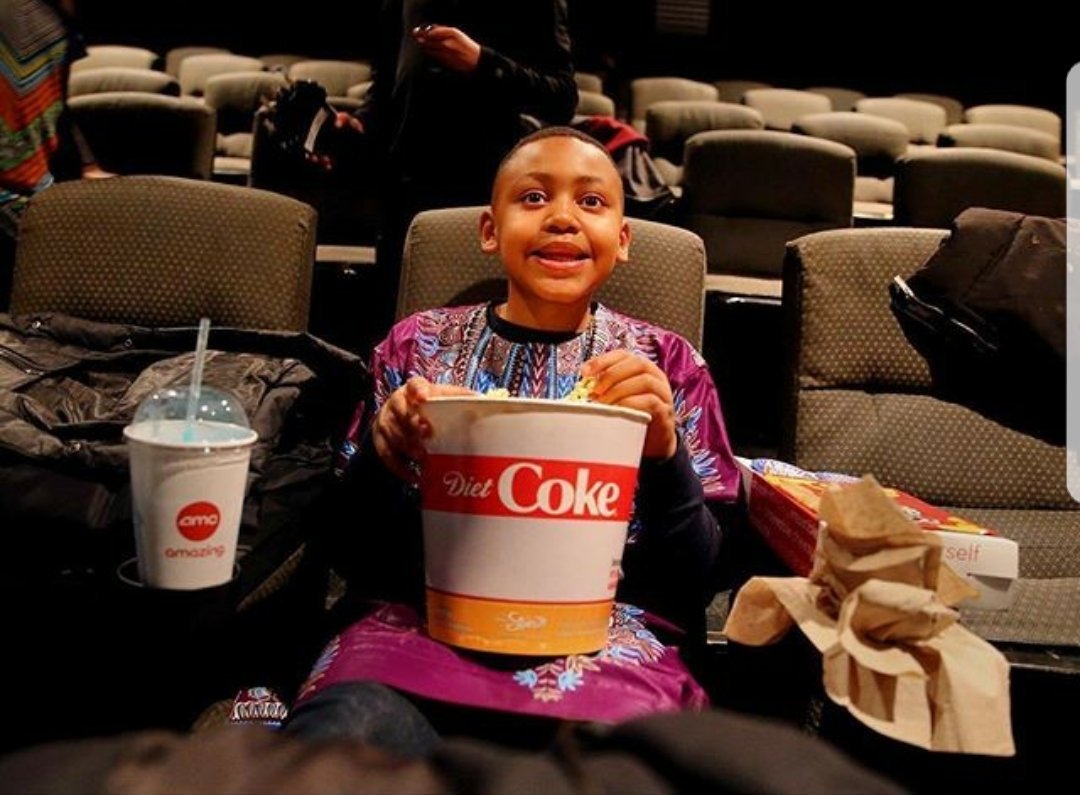
 https://pbs.twimg.com/media/DWMwI_nWAAAudQX.jpg:large

This Toronto Life story about the McCain family. (Article, Toronto Life) The article is from 2013 but this was the year I developed a slightly unhealthy obsession with that family. And this article just solidified that obsession. It's always fun to get a glimpse into how the 1% lives... especially when they happen to be from a small town in New Brunswick.

I brought the party to my dying father's hospital room. (Article/radio doc, CBC). I am sharing a lot from CBC, and honestly a lot of that is because the CD player in my car is broken and the radio dial is normally turned to CBC Radio 1. The day this came on, though, I was doing some chores around the house and it was a rare occasion of listening to the radio outside of the car. This one is hard to listen to without crying. It's beautiful and human and I love it.

Stanley Hauerwas. Modern American Puddleglum (Article, Mere Orthodoxy) Featuring the quote that resonated the most with where my faith was this year: "Jesus is Lord, and everything else is bullshit." Coming from a theologian, that's so liberating. Being a Christian does not mean subscribing to a certain orthodoxy or creed or having everything figured out about everything. It means staking your life on Jesus-- and sometimes a life where Jesus is Lord means letting go of the religious claptrap you thought was holding you close to God.

Davita's amazing blog post (Blog post). My friend wrote a blog post about feminism and Charlotte Smith and more and it's very good. And she even managed to make a jab at 2018's awful Bachelor, Arie, so that just confirms the brilliance of the piece.

Hell... and How to Get There (Book chapter). Brian Zahnd wrote about hell, and it's helped me widen my thinking. Here at the beginning of 2019, I have to admit that I really am not sure what happens to anyone after we die. Instead, I trust God to be good.

Why It's Hard to Escape Amazon's Long Reach (Article, Wired). This one's from the end of the year but I was shocked at the many things that Jeff Bezos has his hand in. And coming from an economic sociology perspective, I am left wondering what kind of unanticipated impacts the dominance of Amazon has (and will have) on our lives. And I am also thinking about the ways our economic system allowed this to happen-- should it have? Is there a better way, and if so, what?

Books
I used to always finish any book I started reading, even if it felt like a marathon to do. This year I decided that life is too short to read books you don't like, or to read books just because they are classics or whatever. So this year, I picked up but didn't finish Toni Morrison's Song of Solomon; Ursula K. Le Guin's The Dispossessed, Studs Terkel's Working, and probably a lot more books. It's not that I didn't like them, and in fact I hope to pick them up again someday. But they got pushed aside in the shuffle of grad student life.

But as for  books I did read, these are the ones that have stuck with me this year

Academic:
Ghosts in the Schoolyard: Racism and School Closings on Chicago's South Side by Eve Ewing
From Traps to Draggers: Domestic commodity production in Northwest Newfoundland, 1850-1952 by Peter Sinclair
Why Rural Schools Matter by Mara Tieken
People, Resources and Power: Critical Perspectives on Underdevelopment and Primary Industries in the Atlantic Region edited by Gary Burrill and Ian McKay

Faith:
The Furious Longing of God by Brennan Manning
Everybody Always by Bob Goff
The Violence of Love by Oscar Romero

Nonfiction:
Everything Happens for a Reason and Other Lies I've Loved by Kate Bowler
Seven Fallen Feathers by Tanya Talaga
All We Leave Behind by Carol Off

Fiction:
The Boat People by Sharon Bala

Movies
Without meaning to, I went to the cinema more times in 2018 than any other year. The movies that really stuck with me, though, were these ones.

A Star is Born
Free Solo
The Dawn Wall
Won't You Be My Neighbor?
Black Panther
Many Beautiful Things (came out 2017)

Music
Some artists I got really into this year. It often takes just a single song for me to be hooked on an artist-- here I am going to link to the song that caught my attention. Most of these songs didn't come out in 2018, but I listened to them in 2018.

Rex Orange County
Kweku Collins
Donovan Woods
Rainbow Kitten Surprise
Aquakulture

In 2018, some favourite artists also released new music, like Anderson .Paak, Chance the RapperNoname, and Twenty One Pilots.

The Christian songs that have stuck with me this year are Closer to Your Heart and Slow Kingdom Coming.

WOW. This was extensive. Hope it's at least a little interesting to you. Can't wait to see what sticks in 2019.


Tuesday, December 11, 2018

It's a Wonderful Life and Membership


The concept of embeddedness, turned into an economic concept by Karl Polanyi, is the idea that the economy and the society are inextricably linked. The economy is undergirded by social relations, and social relations are affected by the economy. The economic decisions we make are not done in some sort of void, but they affect all of us. I think we all understand this to an extent, but we don’t always factor it into our decisions. 

For example, this summer I was travelling in a van towards the Cambodian capital of Phnom Penh. Around 6pm, we were nearing the capital and started to see throngs of people outside of large gated complexes. Many of them were dressed the same; many of them were women. We drove by countless 8-ton trucks serving as makeshift transports for these people, dozens in each one, standing shoulder to shoulder like packed sardines. We didn’t know what was going on. Later, we found out—we had been driving by at shift change at the garment factories. It was a sobering reminder of the embeddedness of the economy and the society. For, though we are not aware of it, our decisions affect these women, and affect the social landscape of Cambodia. Most of the time, we don't see the people with whom we are connected economically. Our desire to buy cheap, new sneakers has an effect that reaches around the world—we are supporting the jobs of retail workers in Canada, of transport workers, of garment workers in Cambodia. They depend on us, in the same way we depend on them. We depend on one another in this intricate dance. Though we may feel like these garment workers in Cambodia are the farthest thing from us, in fact we all depend on one another.
Low-quality photo snapped while driving past the factories
I like the term Wendell Berry uses for this interdependence. He calls it “membership.” Membership is the idea of being part of something bigger than ourselves; the idea that we have a responsibility for the good of the community, and that we belong to it. In his Port William novels and stories, Berry expands on this idea of membership in a community. In Jayber Crow, he writes: “There are moments when the heart is generous, and then it knows that for better or worse our lives are woven together here, one with one another and with the place and all the living things.” That is, we belong to one another.

Watching It’s a Wonderful Life, Frank Capra’s 1946 Christmas classic, I can’t help but think about this concept of membership. In this film, the young George Bailey is stuck in his small town, giving up his dreams of travel and college to help run his family business, resisting the local capitalist mogul in the process. Much of the first half of the movie is centred on George Bailey giving up his own dreams from a sense of duty: first, on the eve of his own round-the-world trip, he makes a last-minute to stay in the community to rescue the family business rather than let the selfish slum lord Mr. Potter take it over. He even gives his college savings to his little brother. Later, there is a bank run in the town and George and his new bride Mary offer their honeymoon savings to the townspeople to save them from selling their lives away to the almost comically-evil Mr. Potter. 

The height of the conflict in the movie comes when the family business is in danger of closing yet again (due to a silly mistake combined with Mr. Potter’s slimy ways), and Mr. Potter points out how big George’s life insurance policy is, claiming that “You’re worth more dead than alive.” Mr. Potter does not see the inherent worth of George as a human-- he only sees the bottom line. George, weighed down with the idea that he has let down his entire community, is driven to suicide. Thank goodness a hapless angel named Clarence steps in.

It’s a Wonderful Life is a film about membership. From the start, George Bailey has a strong sense of membership, and the responsibility therein. He has faith in the people of the town. Consider the bank run scene. The Bailey Building and Loan is filled with desperate people, and they are about to leave for Mr. Potter’s. He stops them with this speech (as only Jimmy Stewart can) : “Now listen...now listen to me. I-I beg of you not to do this thing. If Potter gets a hold of this Building and Loan, there'll never be another decent house built in this town.  He's already got charge of the bank. He's got the bus line. He's got the department stores. And now he's after us. Why? Well, it's very simple. Because we're cutting in on his business, that's why.  And because he wants to keep you living in his slums and paying the kind of rent he decides. Joe, you had one of those Potter houses, didn't you? Well, have you forgotten? Have you forgotten what he charged for that broken-down shack? Here, Ed. You know, you remember last year when things weren't going so well, you couldn't make your payments. You didn't lose your house, did you? Do you think Potter would have let you keep it? Ca-Can't you understand what's happening here? Don't you see what's happening? Potter isn't selling. Potter's buying. And why? Because we're panicky and he's not. That's why. He's picking up some bargains. Now, We-We can get through this thing all right. We-We've got to stick together, though. We've got to have faith in each other.” 


And of course, as everyone is offering their “Buts,” his wife jumps in, offering their honeymoon money. George and Mary Bailey don’t just say “We’ve got to stick together,” they show it through actions. They put themselves at the mercy of the town. They are members, after all. They know that their prosperity is tied up with the prosperity of the community. They know that if the community is going down, they’ll go down with it.

Throughout the whole movie, the Baileys confound Mr. Potter. His logic, his logic of independence and making money for himself at the expense of others, does not have room for the idea of membership that the Baileys know so well. 

I believe that our economic ideology and system (neoliberalism and capitalism) assume that we are more like Mr. Potter than we are like George Bailey. As we see in the alternate-reality part of It’s a Wonderful Life, the Mr. Potter option has obvious drawbacks. 

After all, as George Bailey passionately says to Mr. Potter: “Just remember this, Mr. Potter, that this rabble you're talking about... they do most of the working and paying and living and dying in this community. Well, it is too much to have them work and pay and live and die in a couple of decent rooms and a bath?  Anyway, my father didn't think so. People were human beings to him, but to you, a warped, frustrated old man, they're cattle. Well, in my book, he died a much richer man than you'll ever be.” 

When I saw those garment workers in Cambodia loading onto trucks to go home after their shifts, it made me think of cattle trucks. I think our global economic system does treat people like cattle. I think we’re living in Mr. Potter’s world. But I want to live in George Bailey’s world. I want to be a responsible member.

Monday, November 5, 2018

The truth of Tacky the Penguin

I know it seems like I have not written here a lot, but if you knew how many posts were in the 'drafts' section of this blog you would see that on many occasions, I have used this platform as a blank page to rant about whatever is bothering me week after week. But for a change, I want to write something that has nothing to do with what's bothering me! I want to write in celebration of Tacky the Penguin.

I love to listen to podcasts as I walk, and recently I have been enjoying Bughouse Square with Eve Ewing, a podcast where the Chicago-based sociologist and poet revisits Studs Terkel's interviews. OK. Stay with me here. The past episode was on Studs Terkel's interview with Shel Silverstein. Ewing said something that I thought was really cool: "Young people shape our canons, because it's these early experiences of literature that shape our very understanding of who we are as readers, and what we're looking for." Ewing and children's book author Adam Mansbach then discuss the fact that our earliest literary influences are children's books. And I can say I look fondly on the books I read and that were read to me as a child-- from The Giving Tree to Love from Katie to Anne of Green Gables to Narnia. But one stands out in my mind. That book is Tacky the Penguin.

Tacky the Penguin is a picture book about a penguin named Tacky. Tacky lived with the other penguins (their names were Goodly, Lovely, Angel, Neatly and Perfect). The other penguins would greet each other politely (Tacky slapped them on the back), march in unison (Tacky marched to his own pattern), dived in the water smoothly (Tacky did cannonballs), and sang beautiful songs (Tacky sang 'How many toes does a fish have?' loudly). One day, hunters came!! All the penguins ran away, but Tacky didn't. Without giving away the whole story, I can tell you that Tacky's differences saved the day.

 https://images-na.ssl-images-amazon.com/images/I/51ouYr58A%2BL.jpg

We used to have so much fun reading this in the Main household! It is a hilarious book, and of course we loved to sing HOW MANY TOES DOES A FISH HAVE as obnoxiously as possible. And looking back on it, I think this book is somehow emblematic of our family. That is, if I had to choose a book that represented the things I love about my family, this would be the one.

I used to be so frustrated at how abnormal my family seemed. I would often wish that we weren't different: that we weren't so Christian, that my parents weren't so old, that we weren't so poor (note: my parents aren't that old or that poor). And I would get embarrassed when these supposed differences were more evident-- I remember when my brother had a piano audition for university, and for some reason my whole family was there, dressed in rubber boots and raincoats because it was Nova Scotia and it was rainy, and it was pretty obvious that we were out of our element. I kept feeling like our voices were too loud or we were taking up too much space or something. But at the same time, I was loving being with them.

We normally pick a Christmas tree together every year, and on more than one occasion we have chosen a tree that does not conform to the ideal Christmas tree-- once when I was young we picked a pine tree so wide that it seemed like it filled the whole living room-- we could even hide underneath it!

When my brother got married, it was another example of my abnormal family. Martin and Candice's wedding was far from normal. It was big and fun and a little disorganized-- just like our imperfect, tacky family. Conforming to the norm never seemed to be a priority for my family, and at times I have been embarrassed or even ashamed of that. But mostly, I am happy that I have a family that relates more to Tacky the Penguin than to Goodly, Lovely, Angel, Neatly or Perfect.

In just a few months, there will be another member of the Main family. And it is my prayer that he or she (I just know it's going to be a she) will have the courage to be Tacky the Penguin: to unapologetically be herself, to spend more time developing good character than developing the appearance of good character, and, if it comes to it, to save the day.

Tuesday, May 29, 2018

Lunenburg and Truro, and hipster cafes

This morning, I read an article in the Globe and Mail about the transformation of Truro's old Normal College into the public library space. This afternoon, I read an article on CBC's website about the ongoing transformation of Lunenburg's old Bank of Montreal building into an investment firm. When I read the article about my hometown of Truro, I felt proud. I love the way that in Truro, old buildings are being repurposed for today's residents: for example, a few years ago, the old fire station became the Farmer's Market space. Meanwhile, in Lunenburg, the town is undergoing a transformation of its own. 

 Lunenburg's THING is cultural tourism. It sells an atmosphere, a feeling of small fishing villages that have all but disappeared. And the fact that these villages have all but disappeared only make it's appeal grow, as Jim Overton observed in his 1996 book on Newfoundland tourism Making a World of Difference: "It is even popular in some tourist literature to introduce the imminent demise of “the ‘Real’ Newfoundland,” making it even more urgent for tourists to ‘taste’ a way of life which is in jeopardy" (p. 117). When fishing and sea-based occupations became less lucrative, Lunenburg turned to tourism to survive, and it succeeded in this, selling this disappearing way of life and this heritage.

Wanda George of Mount Saint Vincent University has done some work on the town of Lunenburg, studying how tourism has affected the culture of the community. To summarize a 2005 journal article, tourism in Lunenburg has in fact served to mummify the local culture. The past is viewed with nostalgic and authentic, and anything resembling that past is seen as "the real" culture, even if it is viewed with the eyes of outsiders. Those who can sell the traditional culture, now suddenly valuable, are the ones who become successful. The ones who may have traditionally created the culture may be excluded from it.
This article demonstrates and argues that the commodification of rural resource-based culture at a specific point in time can signify the decay and eventual demise of that particular culture, and, moreover, it invokes the arrival of a new culture to displace it. This new culture is one that is fixated on tourism and based on a set of tertiary and commercial characteristics, one which is not based on the values and traditions of the previous culture in spite of commercialising those life ways into its economic product. Through commodification, the previous culture that evolved as a social construct
gives way to a new construct – a commodity for commercial exchange (p. 91).  


So what we have going on in this community is outsiders defining what the culture is. And so when I read about Garth Turner and how he visited once six years ago, decided he liked the area, and almost immediately bought property there, I see this process in play. From the article:

A lover of older buildings, he was worried about who might buy it and what they might do with it.
"I was kind of thinking, 'If I don't do it, this might turn into a pizza joint, a dollar store or, God forbid, another hipster cafĂ©, and so maybe it has to have a more dignified use, so here we are," said Turner, a financial adviser and analyst whose previous careers have included work as a journalist and federal cabinet minister.
This was the point of the article when I got angry. You know, Nova Scotians, especially rural Nova Scotians, are quick to be accused of innate conservatism and of resistance to change. But this resistance to change is very sensible. We are not anti-innovation or anti-entrepreneur, but we are anti-some dude from Ontario "worried about who might buy" a historic building in the middle of our place. The residents of Lunenburg, I am sure, do not need this sort of paternalism. I thought about the contrast with Truro, where beautiful old buildings, and even some not-so-beautiful buildings, are transformed to become spaces that make the town a more pleasant place to live. Unlike Lunenburg, Truro is not burdened with trying to approximate what an old fishing town should be like. For Truro, which does not rely on tourism as much, there are no expectations to be quaint or charming. So it can be whatever it likes, and I quite like it: for years we had about five large chunks of the Berlin Wall jammed onto a vacant lot beside the Bargain Shop (they have been moved now). Truro just does its thing, and does not pay undo attention to whether outsiders accept its thing. Lunenburg does not have that luxury: an economy with a basis in tourism means that the tourists have the most say in what the town is like. Will a private investment firm bring any benefit to those who reside, year-round, in Lunenburg? Perhaps it will. 

So here is the paradox, which Garth Turner has so aptly illustrated: For primary-industry communities who can no longer rely on that primary industry, they may turn to tourism as a way to make ends meet. Instead of fish, Lunenburg now sells its culture. But this selling of culture, intended as a survival mechanism, is contributing to the death of the community. Garth Turner, attracted to Lunenburg partly because "people really honour their background and heritage," and meanwhile he is building a business which, as far as I can tell, will only help Lunenburg resemble Toronto. Who belongs in Lunenburg, now? Where are the profits of all this tourism going? And what's wrong with hipster cafes?